How Palliative Care Helps Improve Comfort and Quality of Life
Palliative care in Queensland improves comfort and quality of life by managing pain, easing symptoms, and supporting the whole family through a life-limiting illness (and it doesn’t wait until the final stages). For people diagnosed at any point, palliative care works alongside other medical treatment from day one.
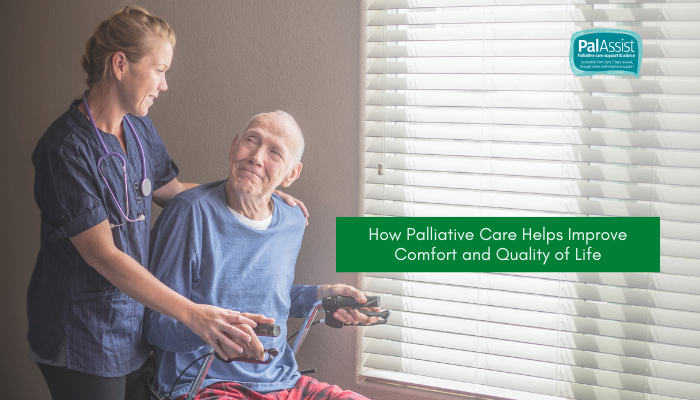
And when that support starts early, patients feel steadier, symptoms ease, and families feel genuinely supported. Most families are surprised by how much a structured care plan changes their day-to-day experience, even in the earliest stages of a life-limiting illness.
PalAssist gives Queensland families free access to nurse-led palliative support services, seven days a week. A registered nurse is always ready to help you find the right care for your situation.
Let’s look at how it all works.
What Is Palliative Care, Really?
People hear “palliative care” and assume it only applies to end-of-life care. That assumption leads families to delay support, often until symptoms spiral out of control (early referral leads to measurably better outcomes).

According to the Australian Government Department of Health, palliative care addresses the physical, emotional, and social needs of both the patient and their family throughout their illness. And it can begin at any stage after diagnosis. It runs alongside curative treatment, so patients receive symptom relief, emotional support, and practical care all at once.
Think of it like a support crew running alongside a marathon runner. Their job is to manage the pain, the exhaustion, and the fear, so the runner can keep moving forward.
How Palliative Care Improves Quality of Life Day to Day
When physical and emotional needs go unmet, pain increases, sleep suffers, and family relationships feel the strain. That’s why health professionals build a care plan around the patient’s priorities, following the National Palliative Care Standards.

Two areas stand out above the rest in improving daily quality of life:
Managing Pain and Physical Symptoms
Palliative care providers work on reducing pain and controlling other symptoms that disrupt daily comfort. With symptoms better managed, patients can rest, eat, and stay connected to their loved ones.
To keep that comfort consistent, the care team reviews medications and adjusts treatment as needed, giving patients fewer disruptions and more time feeling present.
Emotional and Psychological Support
A serious diagnosis brings fear and psychological strain for both the patient and their family. Palliative care services address all of it, with counselling, bereavement support, and spiritual support built into every care plan.
In our experience working alongside patients facing life-limiting illness, addressing emotional needs early gives patients and families a steadier foundation. And once that foundation is in place, palliative care becomes even more valuable as a life-limiting illness progresses.
Early Palliative Care for Life-Limiting Illness
A life-limiting illness is any condition where a cure is no longer possible, and the focus shifts entirely to living well.
When families receive that news without any warning, the weight of it lands all at once. Suddenly, there are decisions to make, symptoms to manage, and a whole new kind of exhaustion to carry.
Palliative care is the way to go in such scenarios. We’ve seen how much early involvement changes things. It brings symptom relief, daily care support, and a team that walks alongside families through every stage. Patients feel steadier, carers feel less stretched, and daily life holds together better.
Home palliative care is one of the most practical ways to build that kind of stability.
Home Palliative Care: Comfort Where It Counts
People recovering from serious illness often want one thing: to be in the comfort of their home. Home palliative care makes that possible without compromising on the quality or consistency of professional care.
And there are two reasons it works as well as it does.
The Team Behind Home-Based Care
Home palliative care runs through a coordinated team of healthcare professionals who visit regularly. Every visit is built around the patient’s current symptoms, goals, and personal care preferences. That means the support always fits, and patients never have to explain their situation to someone new.
Clinical and Emotional Support at Your Door
On every visit, the care team handles medications, personal care, and emotional support. And as things change, they bring in additional palliative care services like specialist consultants, so the patient always has the right support in place. Patients spend less time in the hospital and more time where they feel most at ease.
End of Life Care and Advanced Care Planning: Preparing With Clarity
End-of-life care focuses on comfort, dignity, and honouring the wishes a patient has expressed. Advance care planning is how families make sure those wishes are heard (Queensland’s Advance Health Directive legally recognises this document).
We’ve seen how a documented plan can remove an enormous weight from family members who face those decisions under pressure.
Three steps make advance care planning more manageable:
| Step | What It Involves | Who to Include |
| Document Wishes | Recording preferences around treatment, resuscitation, and dying at home | Patient, family, doctors |
| Start the Conversation | Talking openly about values, fears, and personal preferences | Patient, carers, and spiritual support |
| Review Regularly | Updating the plan as the illness progresses | Healthcare professionals, family |
The real value of advance care planning shows when a crisis hits and decisions need to be made at a moment’s notice. Without a documented plan, those decisions often fall to family members at the worst possible time.
Paediatric Palliative Care: Support Beyond the Child
A child’s life-limiting condition touches everyone around them. For example, parents lose sleep, siblings struggle to understand, and carers push through exhaustion day after day.
A seriously ill child has different needs from those of an adult. Paediatric palliative care services in Queensland reflect that. They’ll address the physical symptoms and emotional well-being then provide grief support for the whole family.
To help you out, PalAssist connects Queensland families with the right paediatric palliative care services and providers. That includes dedicated facilities like Hummingbird House (one of the few dedicated paediatric facilities nationally), giving families access to specialist care close to home.
Palliative Care Providers Across Queensland
Queensland has a broad network of palliative care providers, covering government-funded community services, hospital-based teams, and specialist organisations spread across the state. Queensland Health helps fund and coordinate these services across public hospitals and community settings, so families can access support close to home.
For families in regional and remote areas, distance can make it feel harder. SPaRTa, a telehealth service, bridges that gap by connecting rural and remote patients with nurse-led palliative support, with no travel required.
We know how disorienting it can feel to search for care during these times. PalAssist removes that burden entirely. A registered nurse identifies the right providers and services for your family across Queensland, including the Sunshine Coast.
For Aboriginal and Torres Strait Islander people, that support goes further. Queensland Health provides culturally appropriate palliative care that respects community values, traditions, and the deep significance of country. PalAssist connects families with those specific services and community organisations, so care feels right.
Finding Comfort Starts With a Single Phone Call
Living with a life-limiting illness is hard, and no family should have to figure it out alone. Across Queensland, free nurse-led palliative care services are available right now for anyone who needs them. Reaching out early gives families more time, more options, and a steadier path forward.
Our team at PalAssist will walk alongside you through every step. We handle the searching, the referrals, and the coordination, so you can focus on your family. Call us on 1800 772 273 or chat with us online.